Cypriot Copper and Metal Use in Sardinia Between the Late Bronze Age and the Early Iron Age
Multidisciplinary Investigations into the Role of Cypriot Copper in Sardinia’s Metal Circulation


- Runtime: 01.08.2026-31.07.2027
- Supporter: Fritz Thyssen Foundation
- Partner: Bülent Kizilduman and Ph.D. candidate Elif Doğru/Eastern Mediterranean University in Famagusta, Northern Cyprus
The Fritz Thyssen Foundation is funding a new research project at the Curt Engelhorn Center for Archaeometry (CEZA) in collaboration with Bülent Kizilduman and doctoral candidate Elif Doğru from the Eastern Mediterranean University in Famagusta, Northern Cyprus, which addresses one of the central questions in archaeometallurgy: What role did Cypriot copper play in Sardinia’s metal supply between the Late Bronze Age and the Early Iron Age?
The project focuses on so-called oxhide ingots—distinctive copper ingots that were widely distributed throughout the Mediterranean as a standardized form for transporting raw copper. Numerous archaeological finds demonstrate that these ingots were shipped from Cyprus to Sardinia and formed part of extensive long-distance trade networks. Nevertheless, many questions concerning the origin of the copper, its processing, and the trade routes involved remain unresolved.
Funded by the Fritz Thyssen Foundation, the project adopts an innovative multidisciplinary approach. Using high-precision lead isotope, rhenium-osmium isotope, and trace element analyses, researchers will investigate two oxhide ingots discovered in Cyprus, together with additional comparative samples, will be investigated. The aim is to determine the provenance of the copper as precisely as possible and, for the first time, to systematically characterize the osmium isotopic signature of Cypriot copper.
The project is motivated by recent studies of Sardinian bronze artefacts that revealed exceptionally high osmium concentrations and unusual isotopic signatures. To date, these characteristics cannot be fully explained either by Sardinian ore deposits or by known metallurgical processes. The new research seeks to determine whether these signatures were already present in the raw copper produced in Cyprus or whether they developed during subsequent processing and metal recycling.
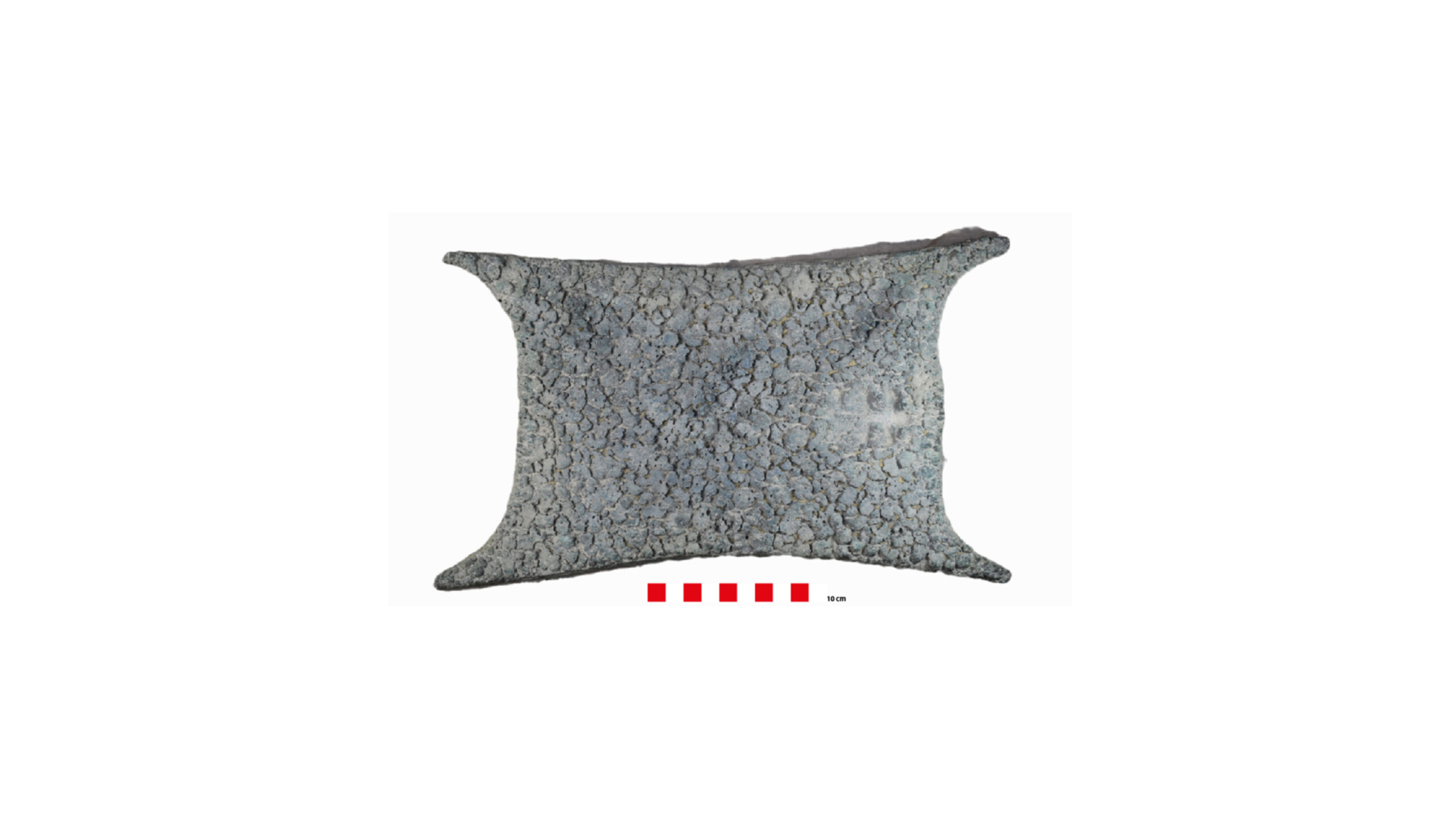
In addition to investigating the provenance of the metal, the project will also examine the production of the oxhide ingots themselves. By analysing multiple samples taken from different areas of individual ingots, the researchers will assess whether the ingots were cast from a homogeneous copper melt or whether different batches of copper were mixed together. The results are expected to provide new insights into the organization of Late Bronze Age copper production and the technological capabilities of contemporary metalworkers.
The project builds on many years of research into the provenance of archaeological metals. In recent years, CEZA has developed new analytical methods that combine different isotope systems, enabling a significantly more precise reconstruction of ancient raw material flows. The newly founded pilot study extends this approach for the first time to Cypriot oxhide ingots, thereby establishing important reference data for future investigations across the Mediterranean.
Through the support of the Fritz Thyssen Foundation, this research project will provide new insights into the provenance of ancient metals, the trade relations between Cyprus and Sardinia, and the organization of the Mediterranean metal economy between approximately 1500 and 900 BC.